Case Study Club
Growing a product design newsletter through user research, content strategy, and experimentation
USER RESEARCH
CONTENT STRATEGY
EXPERIMENTATION
WRITING
Project Overview
In 2023, I was invited by Case Study Club founder Jan Haaland to lead its weekly newsletter for a community of 28,000+ product designers.
Drawing on my background in both product design and editorial strategy, I approached the newsletter as a product—using reader research, experimentation, and performance data to understand what readers valued and continuously improve the experience.
Goal
Case Study Club wanted to grow its readership while maintaining a consistent, high-quality weekly publication.
My goal was to go beyond publishing content and build a reader-centered content strategy that could:
Deliver relevant, useful content for designers at different stages of their careers.
Increase readership and engagement through research and continuous experimentation.
Deliverables
Reader research
Content strategy
Content experimentation
Weekly newsletter writing & publishing
Impact
10.7% ↑ readership
7.3% ↑ engagement
8.2% ↑ open rate
Secured Webflow sponsorship
Part 1 — Understanding the Reader
From assumptions to reader insights
When I joined Case Study Club, the newsletter already had more than 28,000 readers, but we had limited insight into who they were, why they subscribed, and what content they found most valuable.
Before making major changes to the newsletter, I wanted to understand the audience behind those numbers.
I created a reader survey focused on three questions:
Who are our readers?
What are they trying to learn?
How do they engage with the newsletter?

When the first research attempt didn't work
I initially distributed the survey through the newsletter itself. Despite the large subscriber base, only three readers responded—far too few to draw meaningful conclusions.
Recognizing the need for a more direct approach, I sent a separate email focusing on the survey. The second attempt generated 56 responses, with a 55.88% completion rate.
Turning responses into a content strategy
The research revealed differences in readers’ career stages, interests, reading habits, and expectations for the newsletter.
Rather than designing for a single “average reader,” I used these patterns to guide decisions about:
Content relevance — selecting topics that addressed different stages of a designer's career.
Format & depth — balancing quick, scannable resources with opportunities for deeper learning.
Content mix — combining familiar, consistently useful resources with new ideas and discoveries.
These insights became the foundation for how I planned, curated, and experimented with the newsletter each week.
I translated the research findings into actionable recommendations that shaped our content strategy

Part 2 — Designing the Content Experience
Turning reader insights into editorial decisions
The research showed that readers came to Case Study Club with different goals, career stages, and amounts of time to spend with the newsletter.
Rather than simply publishing more content, I focused on creating a newsletter that felt consistent enough to become a habit, while varied enough to remain useful and interesting each week.
I developed the content strategy around three principles:
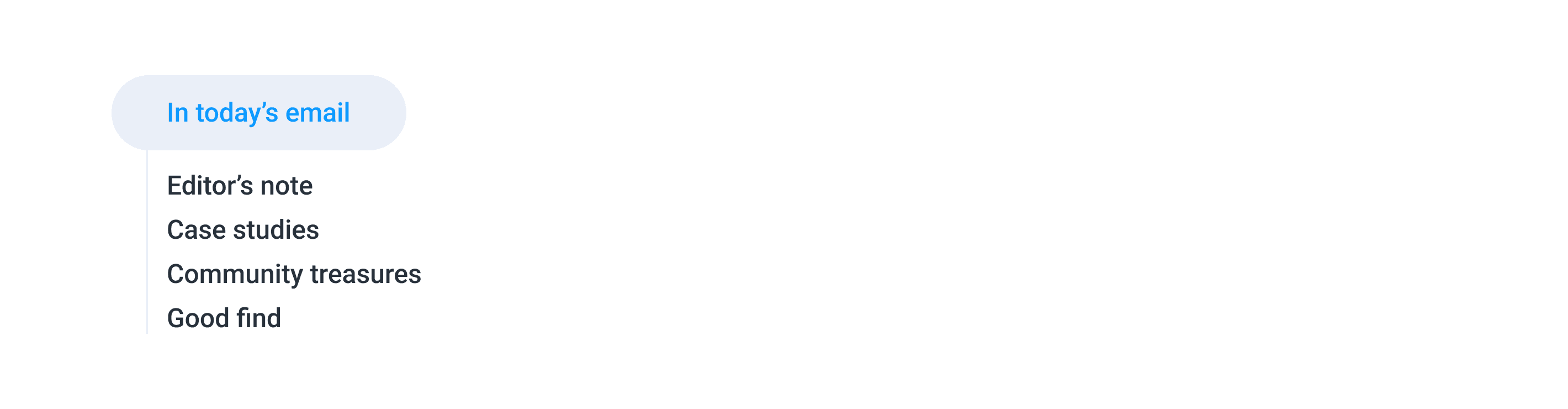
01 — Create familiarity through consistency
A predictable structure helped readers quickly understand what to expect each week and find content relevant to them.
I established recurring content categories and a consistent editorial rhythm, while allowing individual topics and recommendations to change from issue to issue.
The structure stayed familiar; the content stayed fresh.
02 — Curate around a clear theme
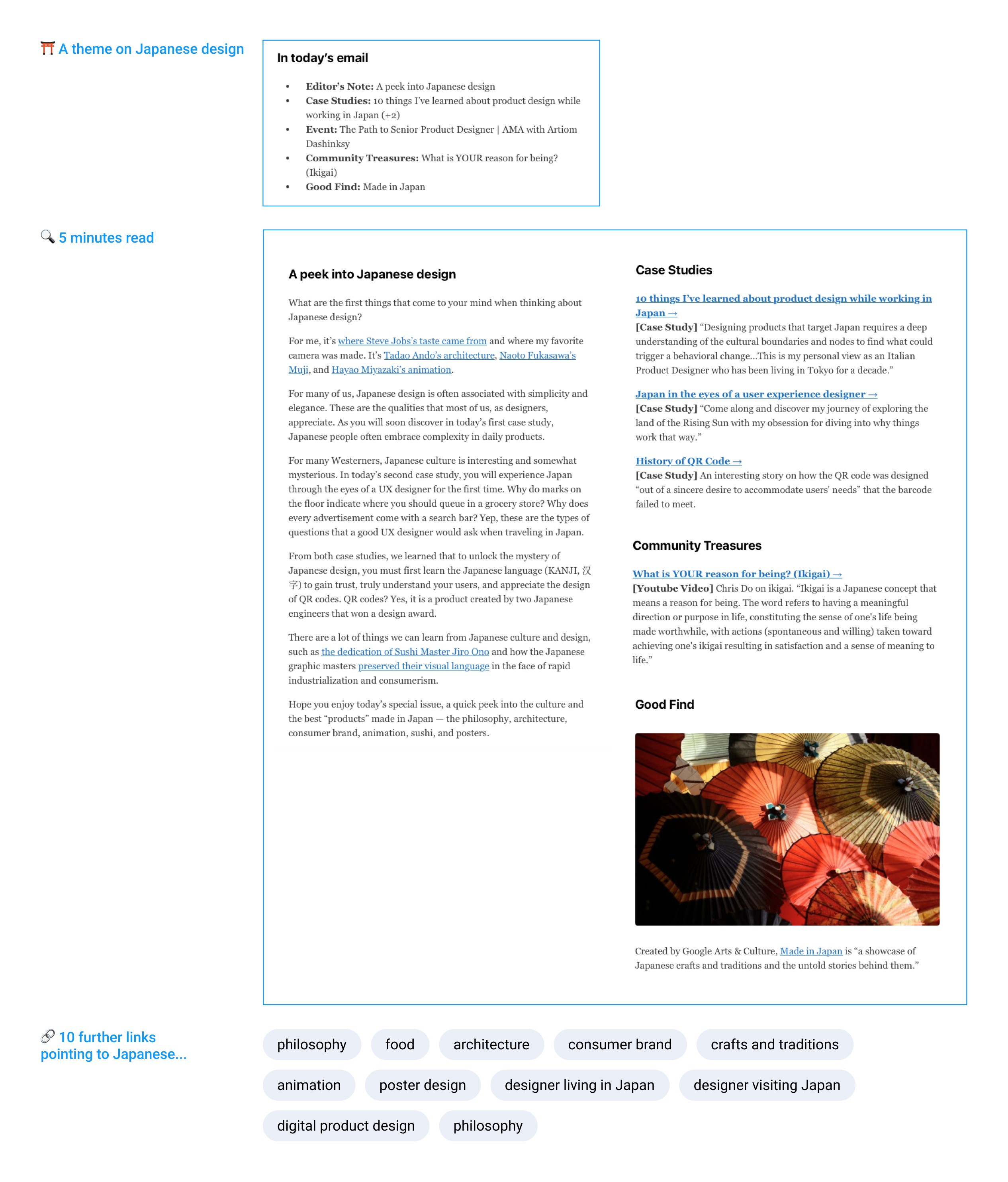
Instead of treating each issue as a collection of unrelated links, I organized content around a central topic whenever possible.
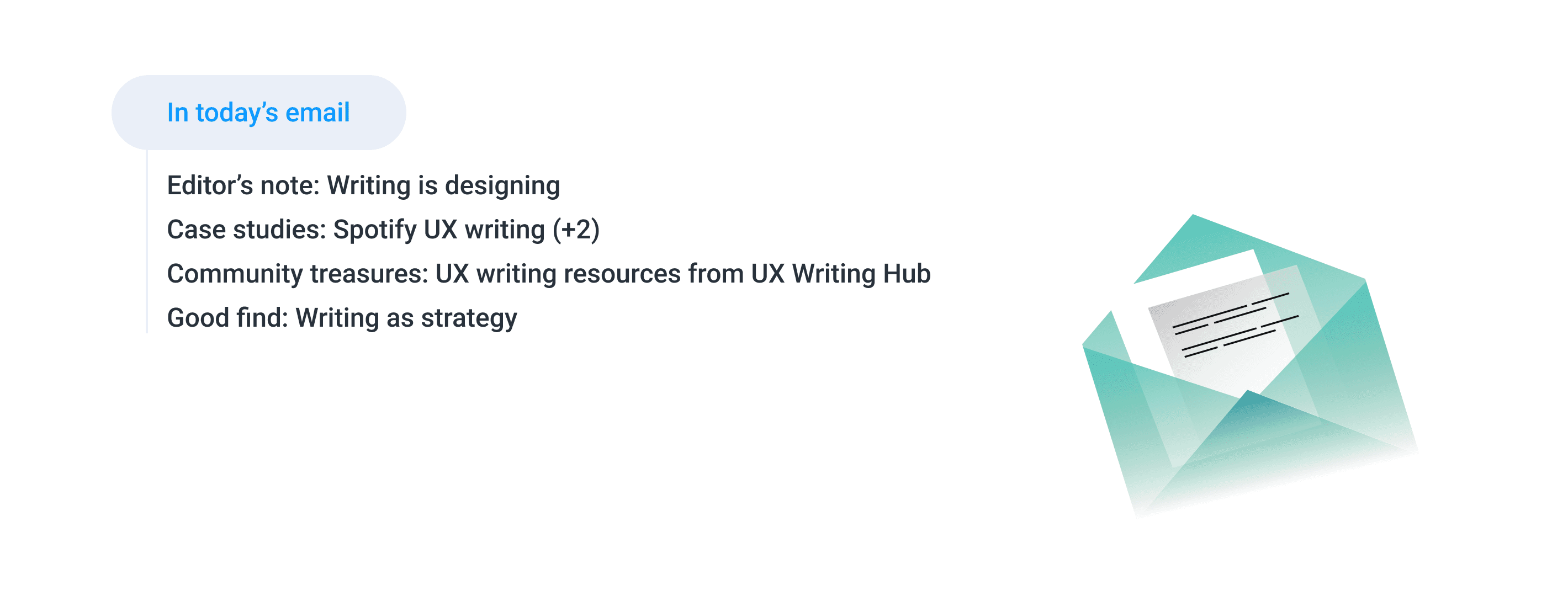
To keep the newsletter relevant and diverse, I explored a different theme each week—balancing topics across reader interests, career stages, and emerging industry trends. Articles, case studies, tools, and resources were then curated around that theme, creating a more coherent learning experience.
To keep the newsletter relevant and diverse, I explored a different theme each week
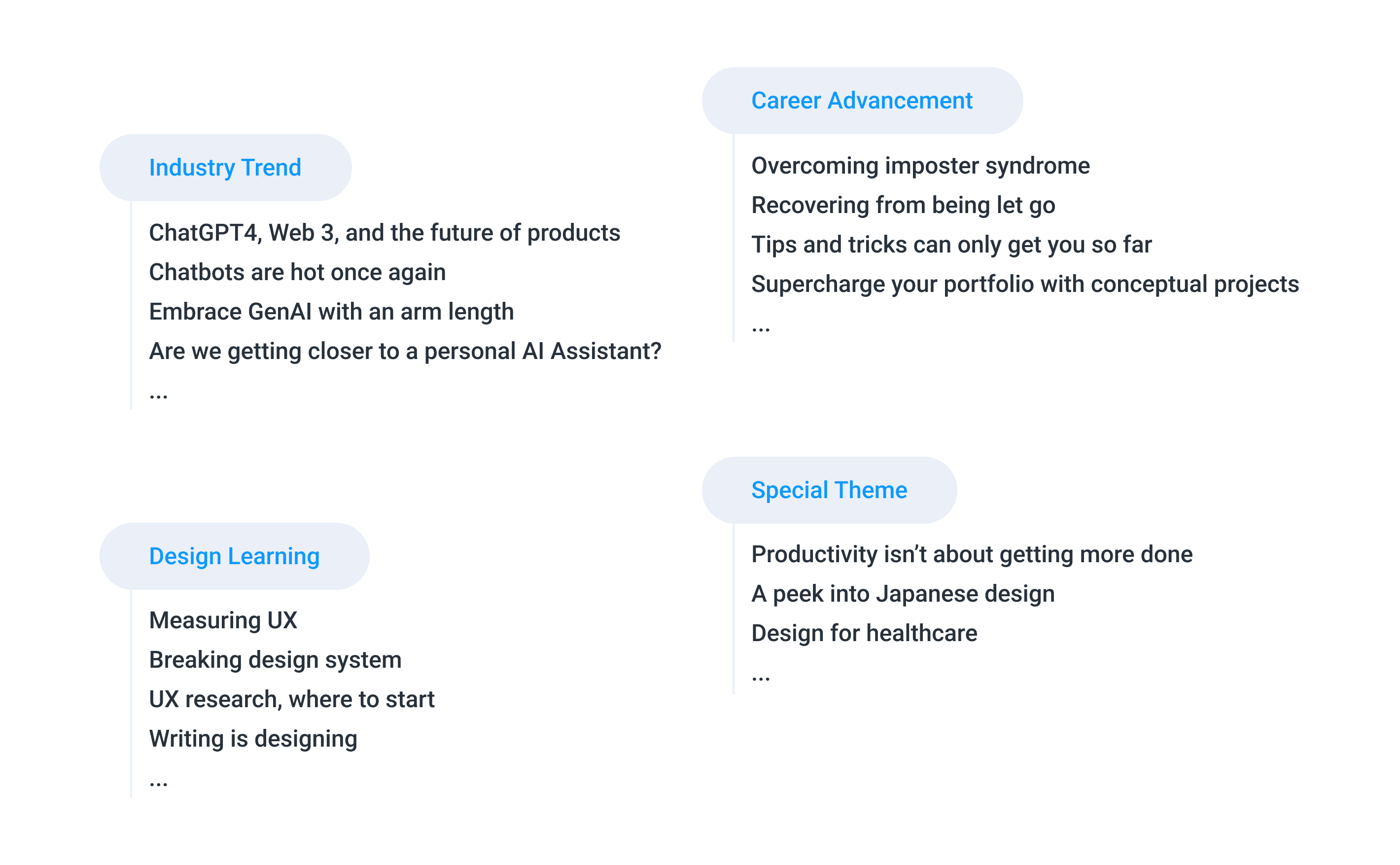
Each newsletter was curated around a clear theme
03 — Design for limited attention
The research showed that 49.1% of respondents spent only 1–5 minutes reading the newsletter.
That changed how I thought about value: readers didn't necessarily need more content—they needed to find useful content quickly.
I prioritized clear hierarchy, concise writing, and careful curation so readers could scan an issue, understand what mattered, and decide where they wanted to go deeper.
These principles became a framework for weekly experimentation. I continued adjusting topics, formats, and content combinations based on reader behavior and newsletter performance.
Part 3 — Measuring & Iterating
Learning from performance
Publishing weekly gave me an opportunity to continuously learn from real reader behavior.
I monitored newsletter performance—including open rates, engagement, and readership growth—to understand which topics and formats resonated most. These signals helped me refine the content strategy over time rather than treating it as a one-time solution.
Experimenting week by week
Each newsletter became a small experiment.
I tested different themes, content combinations, and levels of depth while maintaining the consistent structure readers had come to expect. Performance data from previous issues helped inform what I explored next.
This created a continuous cycle:
Research → Curate → Publish → Measure → Refine
Growing the newsletter
Over the course of the project, the newsletter grew from 28,000 to 31,000+ readers, while engagement and open rates also improved:
+10.7% readership
+7.3% engagement
+8.2% open rate
Business Impact
The newsletter’s growing audience and engagement helped attract new sponsorship opportunities, including a partnership with Webflow.
Beyond the numbers
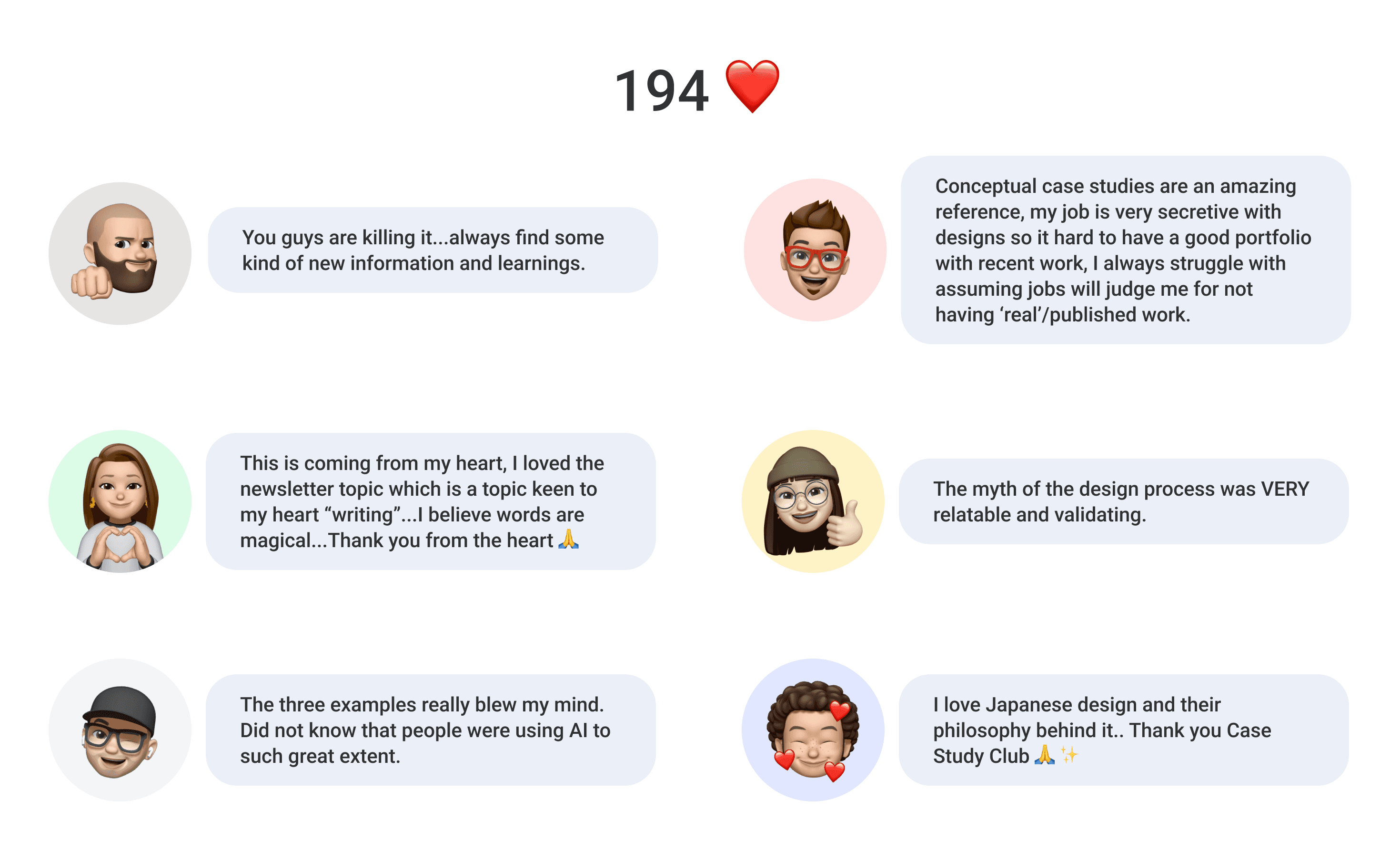
The most rewarding moments came from hearing directly from readers. Many reached out to share how much they valued the topics, resources, and thought put into each edition.
These messages gave the metrics a human dimension—they showed that the newsletter wasn't just growing, but genuinely resonating with the people it was created for.
Reflection
This project reinforced something that connects my editorial and product design backgrounds: good products and good content both begin with understanding the people they serve.
By treating the newsletter as a product—researching readers, making intentional decisions, measuring behavior, and iterating—I was able to evolve it based on evidence rather than assumptions.